Yahoo Spaces
Yahoo Spaces
Exploring how deep personalisation and user-controlled experiences could reshape Yahoo.
PROJECT TYPE
2024
Scope
Branding
Timeline
8 weeks
The Challenge
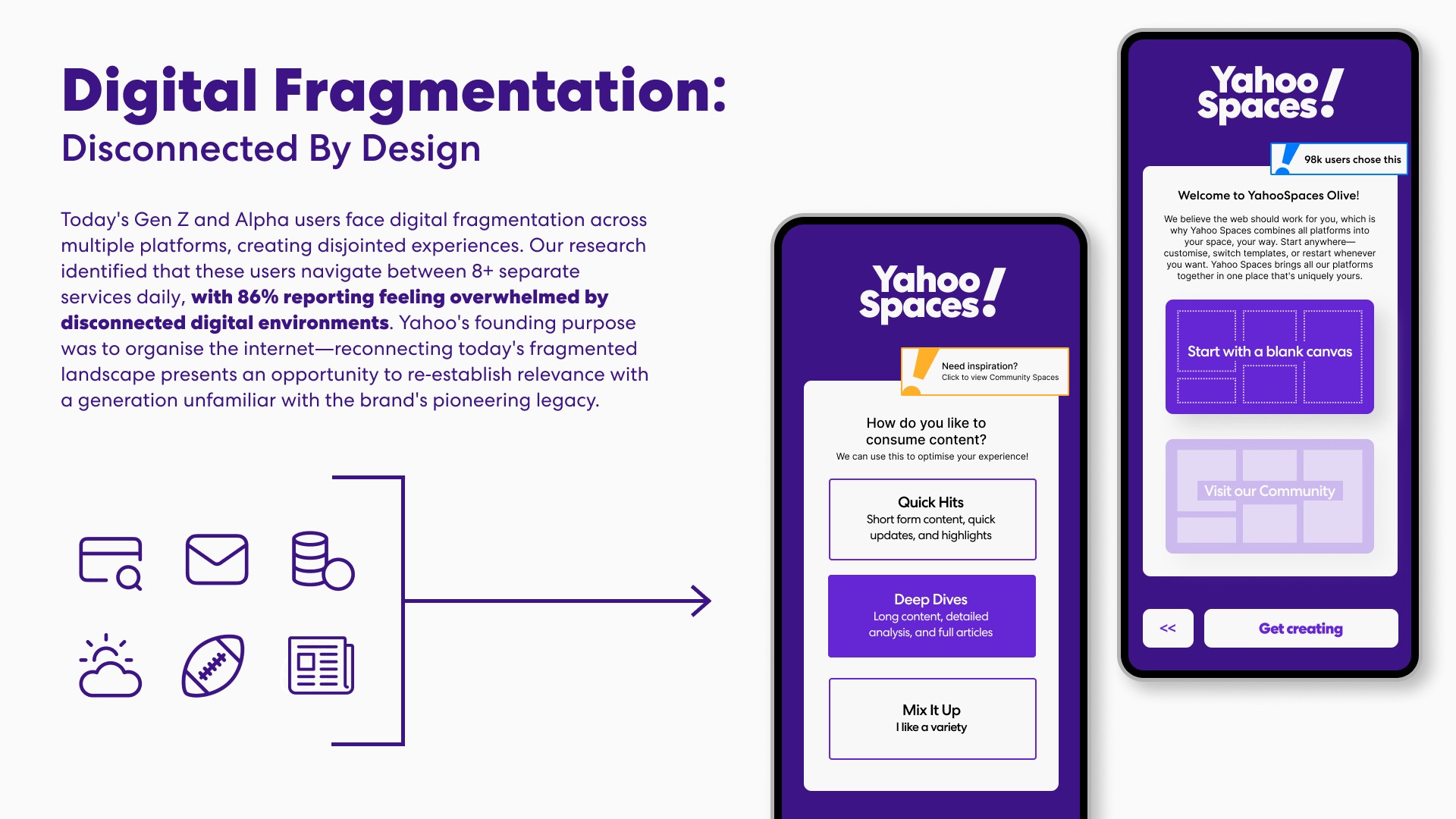
Gen Z and Alpha users navigate multiple disconnected platforms daily, often switching between services for news, entertainment, communication and community.
Gen Z and Alpha users navigate multiple disconnected platforms daily, often switching between services for news, entertainment, communication and community.
Gen Z and Alpha users navigate multiple disconnected platforms daily, often switching between services for news, entertainment, communication and community.
Research highlighted that this fragmentation creates cognitive overload and a lack of ownership over digital identity. The challenge was to design a unified experience that puts control back into the hands of the user, allowing them to define structure, priority and presentation rather than relying on algorithm driven defaults.
Research highlighted that this fragmentation creates cognitive overload and a lack of ownership over digital identity. The challenge was to design a unified experience that puts control back into the hands of the user, allowing them to define structure, priority and presentation rather than relying on algorithm driven defaults.
Research highlighted that this fragmentation creates cognitive overload and a lack of ownership over digital identity. The challenge was to design a unified experience that puts control back into the hands of the user, allowing them to define structure, priority and presentation rather than relying on algorithm driven defaults.

Lack of Ownership Over Digital Spaces
Most platforms limit how users organise content, reducing the feeling of personal identity and agency within digital environments.

Overwhelmed by One Size Fits All Platforms
Users expressed frustration with rigid feeds that surface content they did not choose, leading to disengagement and fatigue.

Desire for Intentional Consumption
Users wanted to actively decide how they interact with content, whether through quick updates, deep exploration or curated mixes based on mood or intent.
Audience and Insights
Audience and Insights
Overwhelmed by One Size Fits All Platforms
An Experience That Felt Fragmented
Users expressed frustration with rigid feeds that surface content they did not choose, leading to disengagement and fatigue.
Users expressed frustration with rigid feeds that surface content they did not choose, leading to disengagement and fatigue.
Lack of Ownership Over Digital Spaces
Unclear Conversion Pathways
Most platforms limit how users organise content, reducing the feeling of personal identity and agency within digital environments.
Most platforms limit how users organise content, reducing the feeling of personal identity and agency within digital environments.
Desire for Intentional Consumption
Outdated Structure and Limited Clarity
Users wanted to actively decide how they interact with content, whether through quick updates, deep exploration or curated mixes based on mood or intent.
Users wanted to actively decide how they interact with content, whether through quick updates, deep exploration or curated mixes based on mood or intent.
IDEATION AND APPROACH
Ideation focused on giving users meaningful control from the first interaction.
Ideation focused on giving users meaningful control from the first interaction.
Ideation focused on giving users meaningful control from the first interaction.
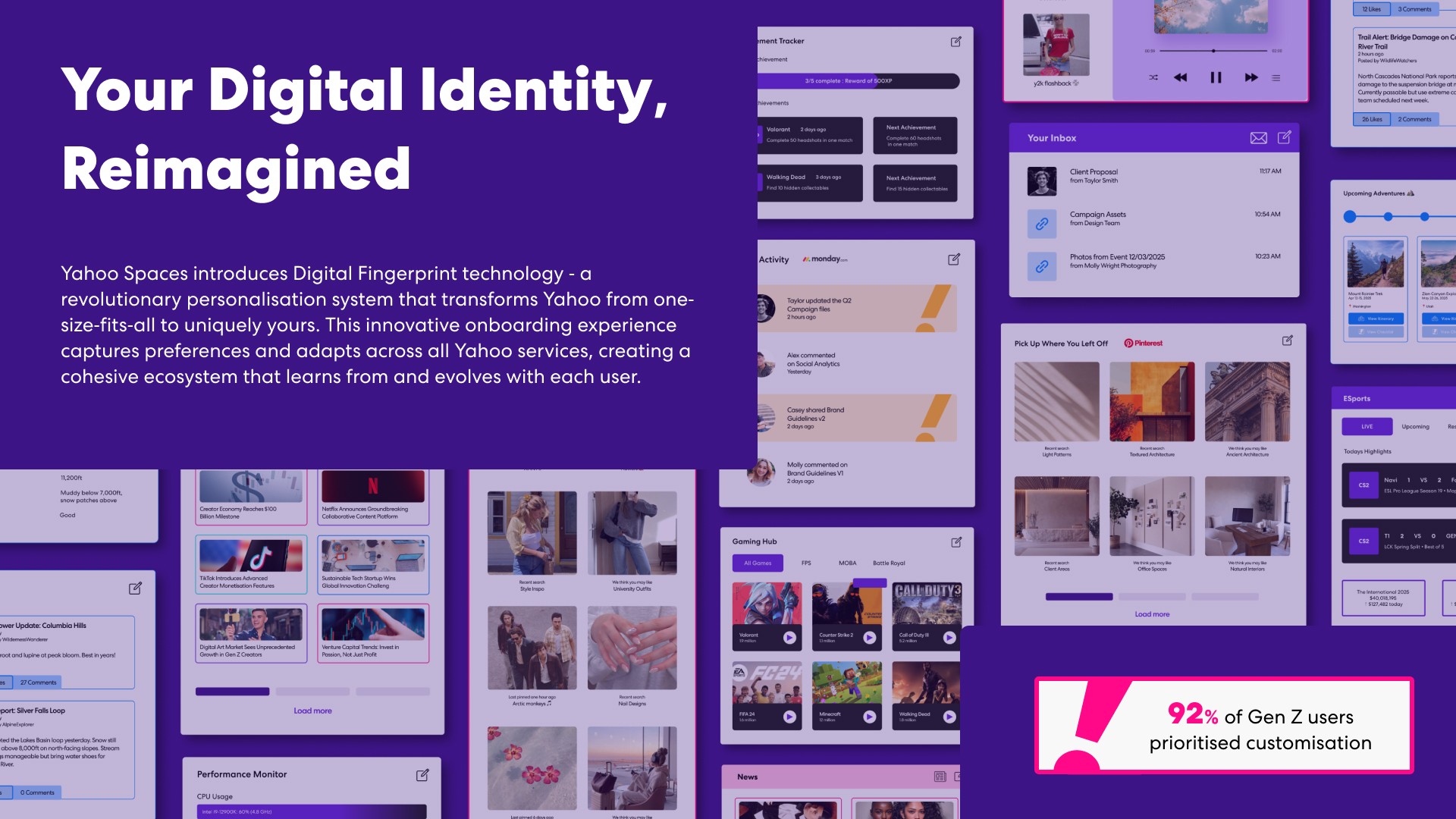
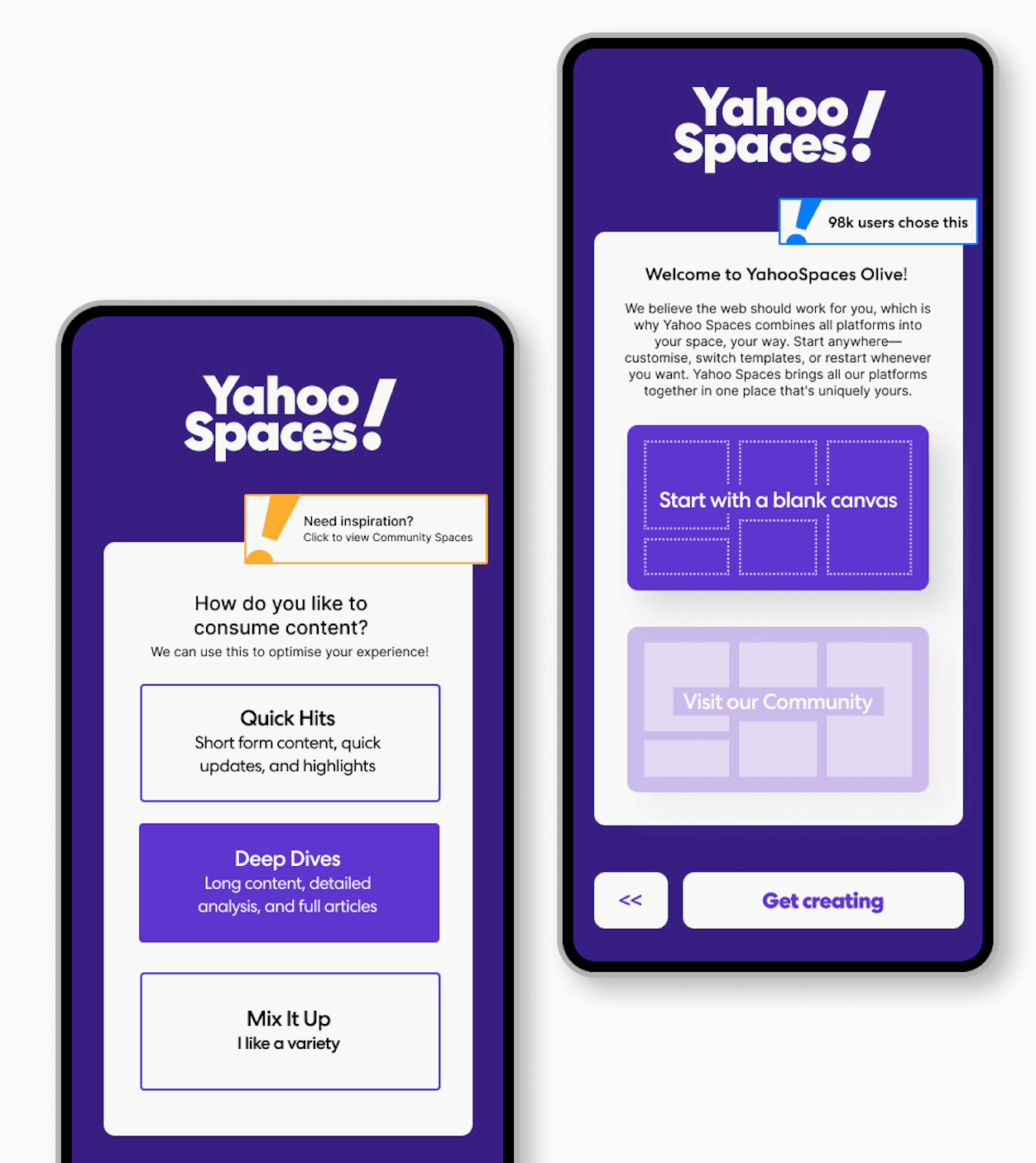
Early concepts explored onboarding as a decision making moment, allowing users to define how they want to consume content through preference based pathways. The idea of spaces emerged as a way to move away from linear feeds, enabling users to create environments tailored to interests, behaviours and communities. Rather than designing a fixed experience, the platform was treated as a flexible system that evolves alongside the user.
Early concepts explored onboarding as a decision making moment, allowing users to define how they want to consume content through preference based pathways. The idea of spaces emerged as a way to move away from linear feeds, enabling users to create environments tailored to interests, behaviours and communities. Rather than designing a fixed experience, the platform was treated as a flexible system that evolves alongside the user.
Early concepts explored onboarding as a decision making moment, allowing users to define how they want to consume content through preference based pathways. The idea of spaces emerged as a way to move away from linear feeds, enabling users to create environments tailored to interests, behaviours and communities. Rather than designing a fixed experience, the platform was treated as a flexible system that evolves alongside the user.
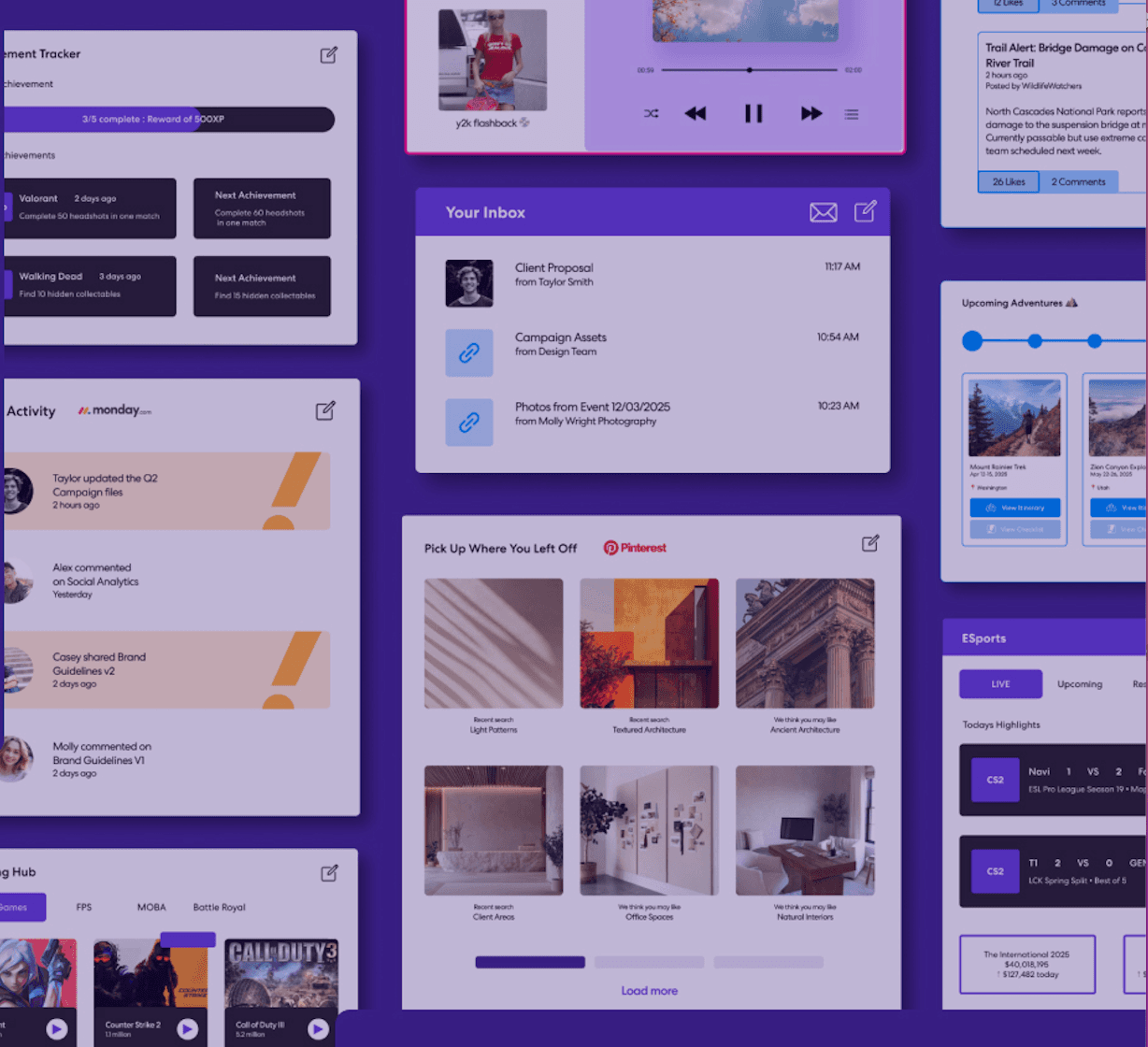
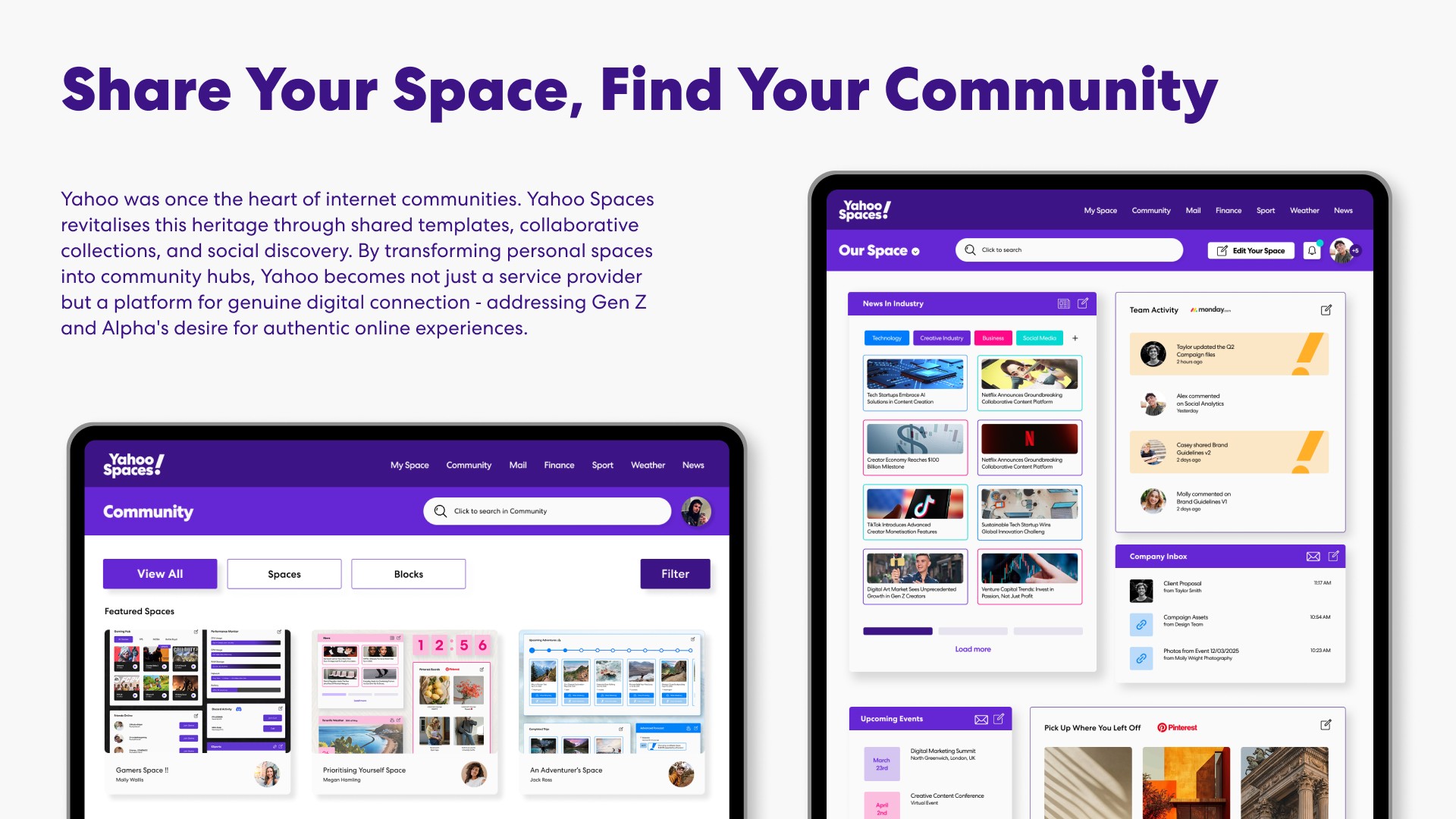
The visual system reinforced the idea of user defined spaces through clear zoning, modular layouts and strong hierarchy. Colour and layout were used to differentiate spaces while maintaining a cohesive platform feel. The interface stayed intentionally restrained so personalisation and content decisions always remained the focus.
The visual system reinforced the idea of user defined spaces through clear zoning, modular layouts and strong hierarchy. Colour and layout were used to differentiate spaces while maintaining a cohesive platform feel. The interface stayed intentionally restrained so personalisation and content decisions always remained the focus.
I introduced a structured research and testing process, using early validation and rapid iteration to guide decisions, reduce risk and ensure the experience evolved around real user behaviour rather than assumptions.
Testing and Evaluation
Testing and Evaluation
81%
Felt More In Control of Their Experience
Choice led onboarding and editable spaces increased users’ sense of ownership, allowing them to shape how content was prioritised and consumed.
69%
Improved Content Understanding
Separating content into distinct spaces helped users better understand context and purpose without relying on algorithm driven feeds.
74%
Preferred Personalisation Led Platforms
Participants responded positively to defining their own experience, favouring intentional interaction over passive scrolling.
81%
Felt More In Control of Their Experience
Choice led onboarding and editable spaces increased users’ sense of ownership, allowing them to shape how content was prioritised and consumed.
69%
Improved Content Understanding
Separating content into distinct spaces helped users better understand context and purpose without relying on algorithm driven feeds.
74%
Preferred Personalisation Led Platforms
Participants responded positively to defining their own experience, favouring intentional interaction over passive scrolling.
29%
Faster Product Configuration
Users completed custom kit builds more quickly once options were grouped into clear stages, reducing backtracking and hesitation during high-commitment steps.
22%
Increase in Completed Enquiries
Introducing clearer reassurance points and a structured journey improved confidence, leading to more users completing enquiries without dropping out.
38%
Improvement in Product Understanding
Clearer hierarchy, progressive disclosure and consistent specifications helped users understand differences between options and make decisions with greater certainty.
The Solution
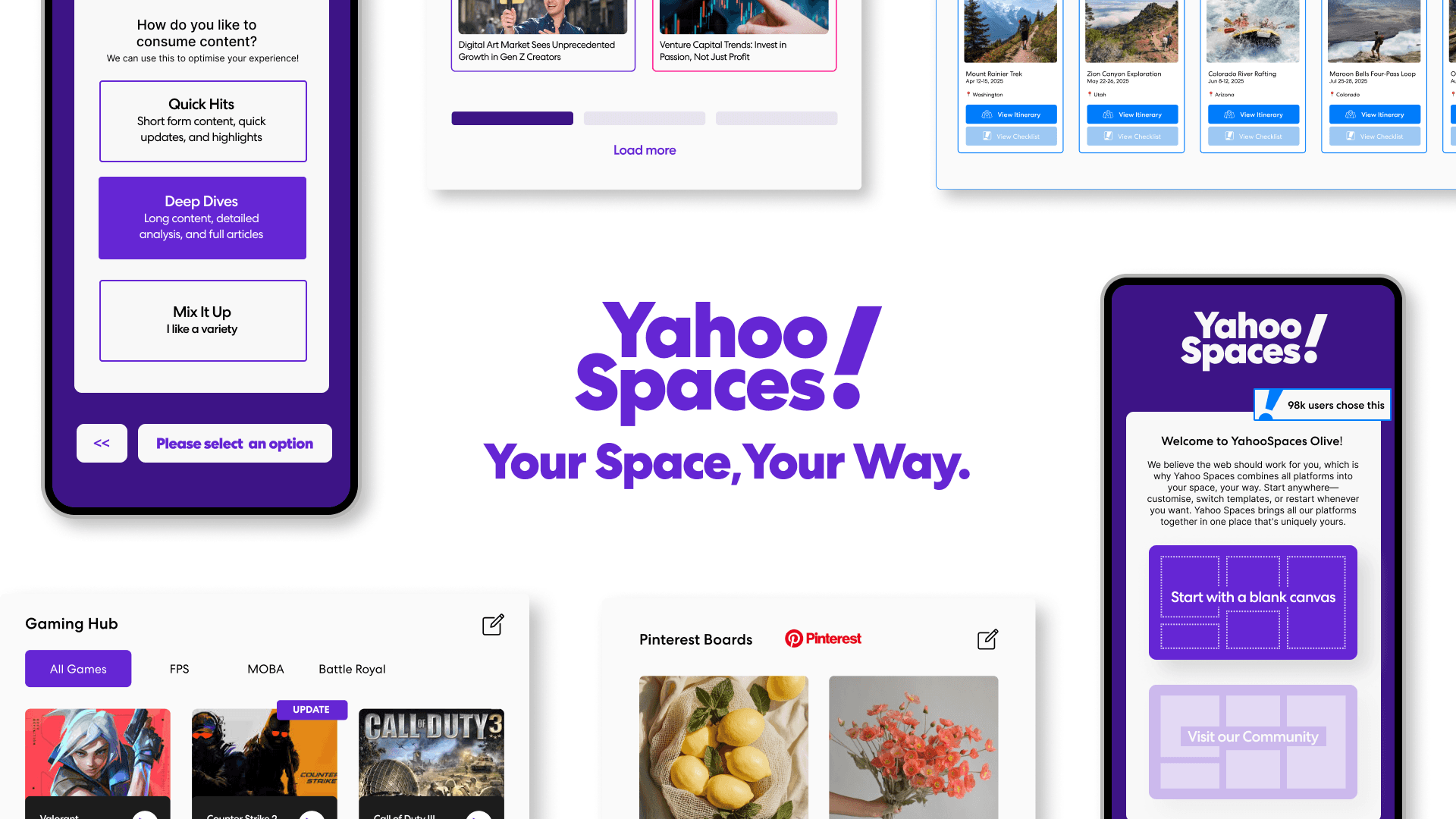
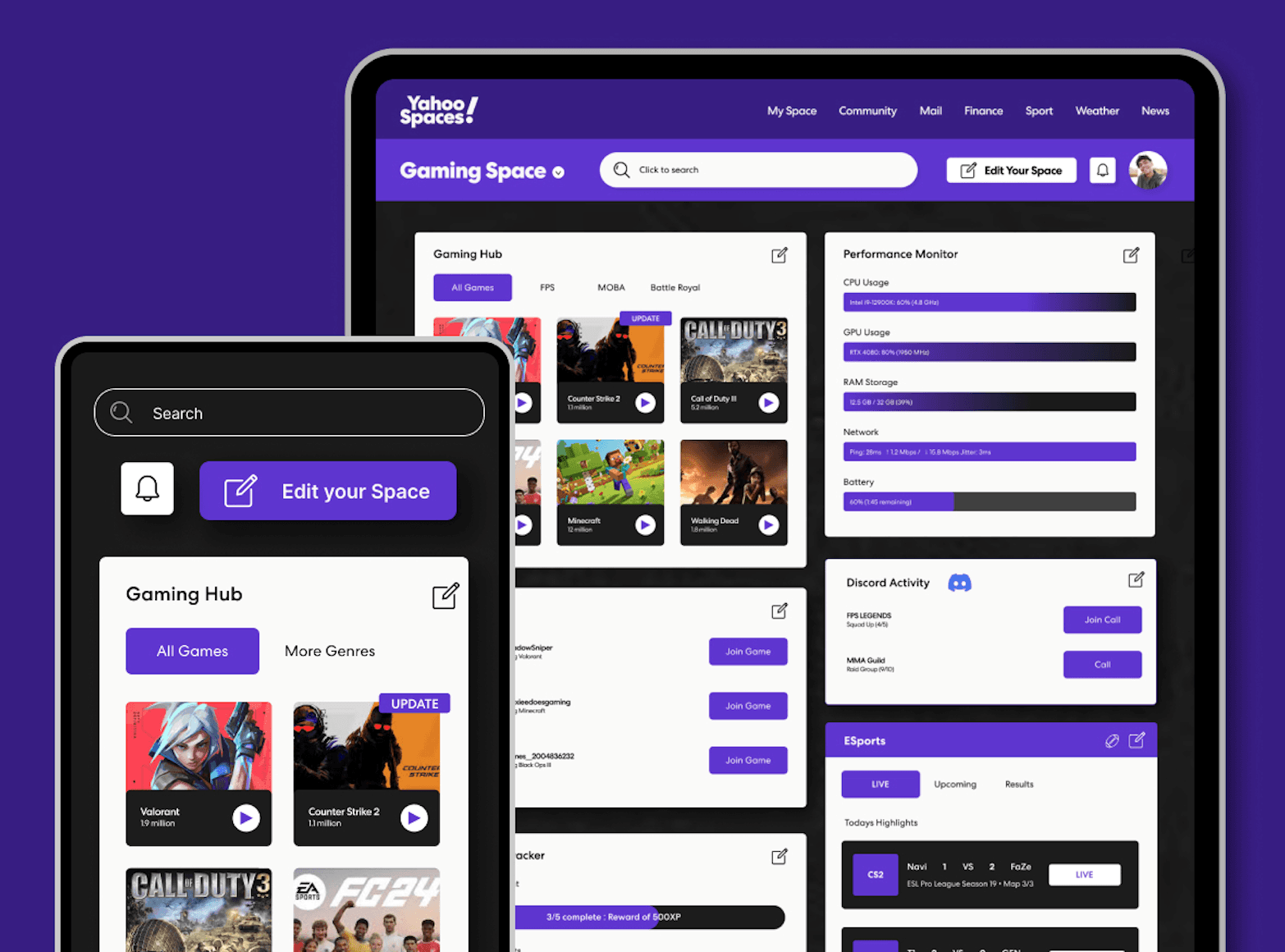
Yahoo Spaces resulted in a fully realised conceptual platform that reframed personalisation as a structural foundation rather than a surface level feature.
Yahoo Spaces resulted in a fully realised conceptual platform that reframed personalisation as a structural foundation rather than a surface level feature.
Yahoo Spaces resulted in a fully realised conceptual platform that reframed personalisation as a structural foundation rather than a surface level feature.
By allowing users to define how content is organised, displayed and shared, the project demonstrated how digital environments can feel calmer, more intentional and more human. As a university project, the outcome prioritised system thinking, interaction design and speculative exploration, showcasing how user led personalisation can reconnect fragmented digital experiences into a cohesive whole.
By allowing users to define how content is organised, displayed and shared, the project demonstrated how digital environments can feel calmer, more intentional and more human. As a university project, the outcome prioritised system thinking, interaction design and speculative exploration, showcasing how user led personalisation can reconnect fragmented digital experiences into a cohesive whole.
By allowing users to define how content is organised, displayed and shared, the project demonstrated how digital environments can feel calmer, more intentional and more human. As a university project, the outcome prioritised system thinking, interaction design and speculative exploration, showcasing how user led personalisation can reconnect fragmented digital experiences into a cohesive whole.