Toilets+
Toilets+
A UX redesign for a portable toilet giant, focusing on reducing friction and aiding the booking process.
PROJECT TYPE
2026
Scope
Branding, UI
Timeline
4 weeks

The Challenge
The previous website prioritised technical detail over clarity, making it difficult for users to quickly identify the correct toilet solution for their needs.
The previous website prioritised technical detail over clarity, making it difficult for users to quickly identify the correct toilet solution for their needs.
The previous website prioritised technical detail over clarity, making it difficult for users to quickly identify the correct toilet solution for their needs.
Services were presented with minimal hierarchy, content felt repetitive across pages and enquiry pathways lacked consistency. Users frequently had to self interpret terminology, which introduced uncertainty and slowed decision making. The challenge was to create a clearer service structure that supported fast understanding while still accommodating a wide range of use cases and business requirements.
Services were presented with minimal hierarchy, content felt repetitive across pages and enquiry pathways lacked consistency. Users frequently had to self interpret terminology, which introduced uncertainty and slowed decision making. The challenge was to create a clearer service structure that supported fast understanding while still accommodating a wide range of use cases and business requirements.
Services were presented with minimal hierarchy, content felt repetitive across pages and enquiry pathways lacked consistency. Users frequently had to self interpret terminology, which introduced uncertainty and slowed decision making. The challenge was to create a clearer service structure that supported fast understanding while still accommodating a wide range of use cases and business requirements.

Overloaded Pages With Little Direction
Long form content and dense blocks of text reduced scannability. Key information such as capacity, use cases and next steps were buried rather than surfaced.

An Experience That Felt Unclear
Users arriving on the site often knew they needed toilet hire but were unsure which category applied to them. The lack of contextual guidance made the service offering feel more complex than it needed to be.

Weak Conversion Signals
Calls to action were present but inconsistent, often appearing without enough supporting context to reassure users before enquiring. This created hesitation at critical decision points.
Audience and Insights
Audience and Insights
An Experience That Felt Unclear
An Experience That Felt Fragmented
Users arriving on the site often knew they needed toilet hire but were unsure which category applied to them. The lack of contextual guidance made the service offering feel more complex than it needed to be.
Users arriving on the site often knew they needed toilet hire but were unsure which category applied to them. The lack of contextual guidance made the service offering feel more complex than it needed to be.
Overloaded Pages With Little Direction
Unclear Conversion Pathways
Long form content and dense blocks of text reduced scannability. Key information such as capacity, use cases and next steps were buried rather than surfaced.
Long form content and dense blocks of text reduced scannability. Key information such as capacity, use cases and next steps were buried rather than surfaced.
Weak Conversion Signals
Outdated Structure and Limited Clarity
Calls to action were present but inconsistent, often appearing without enough supporting context to reassure users before enquiring. This created hesitation at critical decision points.
Calls to action were present but inconsistent, often appearing without enough supporting context to reassure users before enquiring. This created hesitation at critical decision points.
IDEATION AND APPROACH
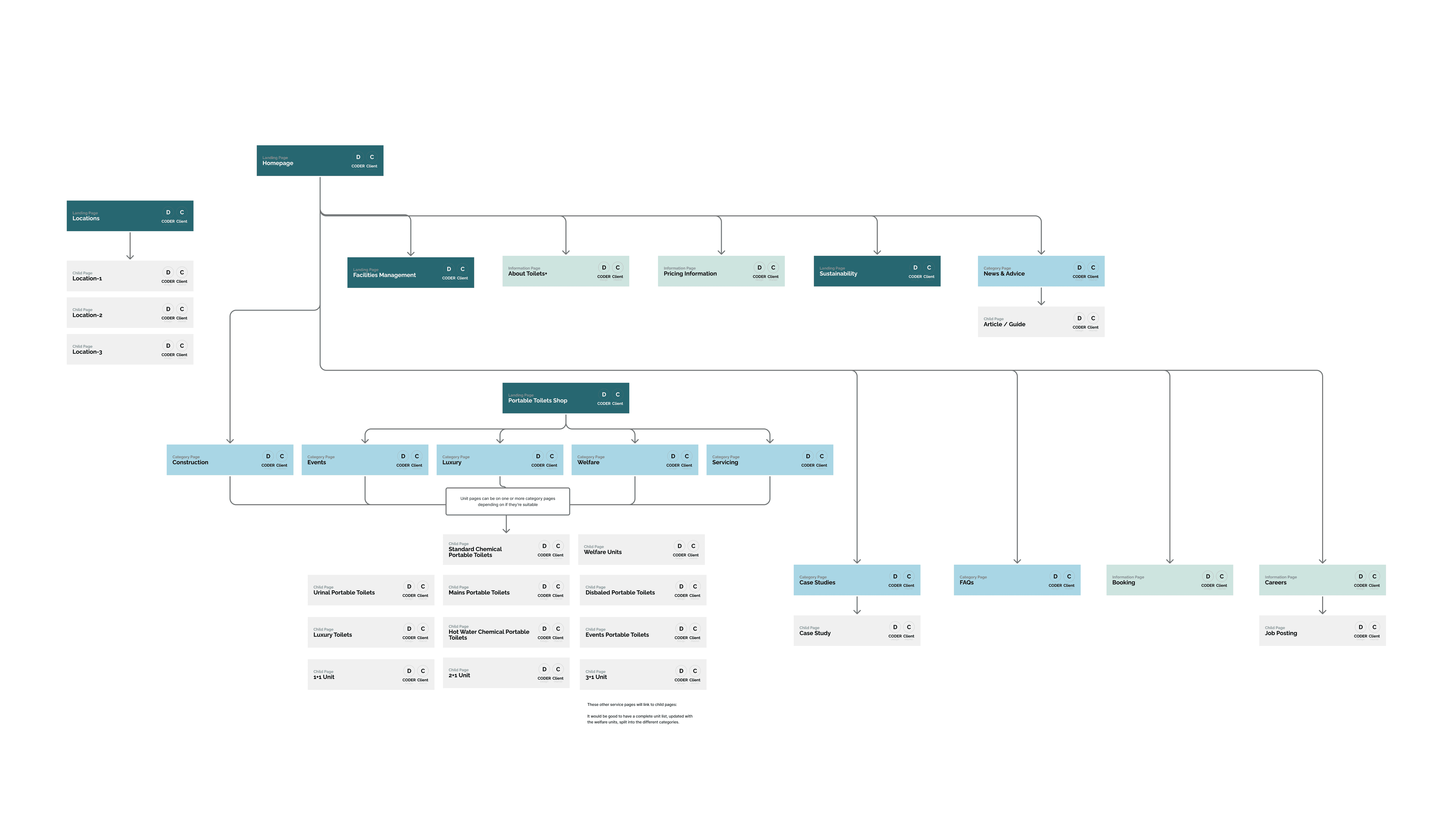
The redesign began by reframing the website around user intent rather than product specification.
The redesign began by reframing the website around user intent rather than product specification.
The redesign began by reframing the website around user intent rather than product specification.
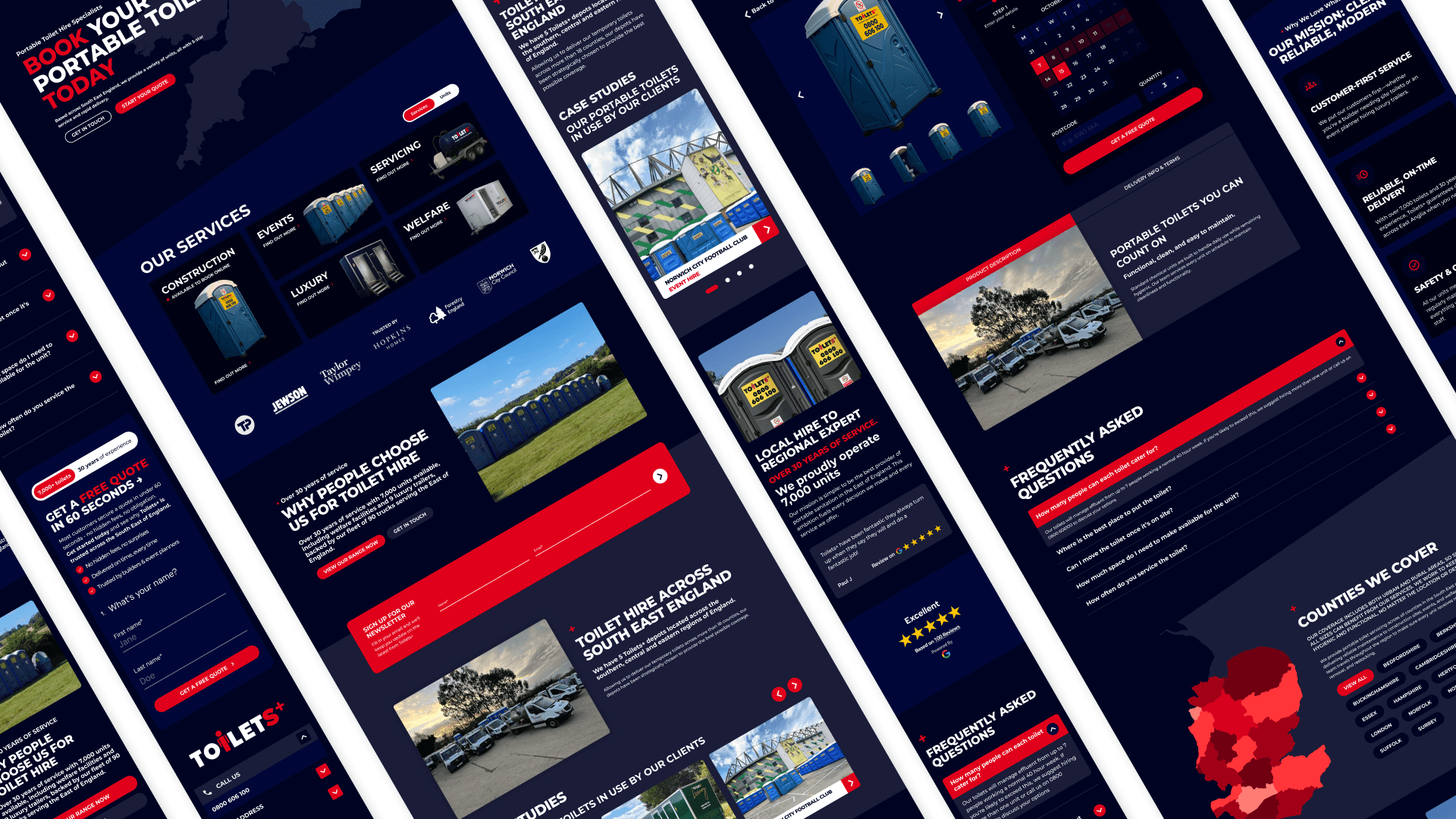
Services were mapped into clear categories aligned to real world scenarios such as events, construction and long term hire. Early concepts explored modular layouts that paired visual cues with short, purposeful copy to guide users through decision making. Emphasis was placed on predictable navigation, progressive disclosure of detail and a consistent content rhythm that could scale as services evolved.
Services were mapped into clear categories aligned to real world scenarios such as events, construction and long term hire. Early concepts explored modular layouts that paired visual cues with short, purposeful copy to guide users through decision making. Emphasis was placed on predictable navigation, progressive disclosure of detail and a consistent content rhythm that could scale as services evolved.
Services were mapped into clear categories aligned to real world scenarios such as events, construction and long term hire. Early concepts explored modular layouts that paired visual cues with short, purposeful copy to guide users through decision making. Emphasis was placed on predictable navigation, progressive disclosure of detail and a consistent content rhythm that could scale as services evolved.
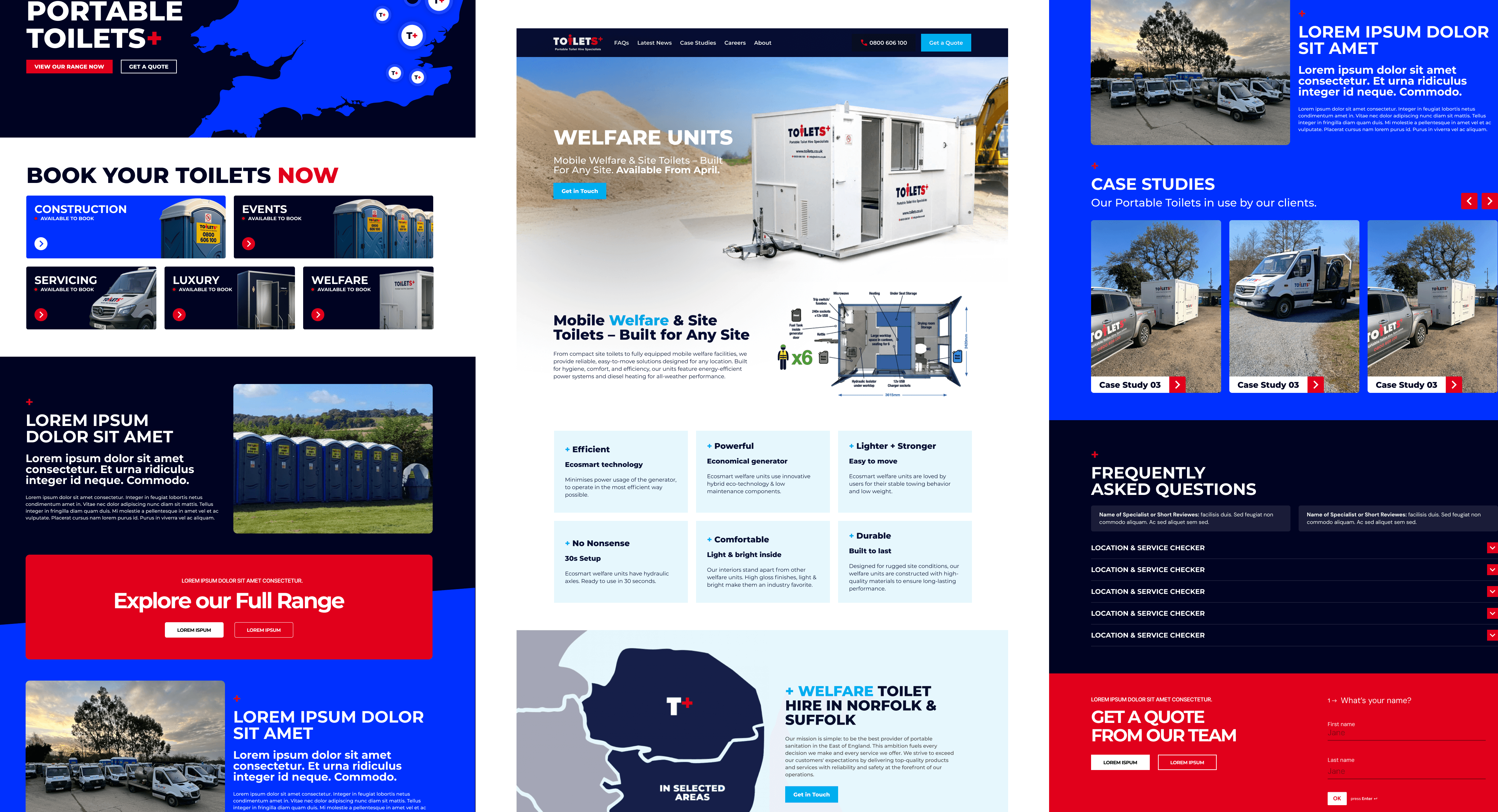
The visual approach focused on clarity and professionalism. Layouts used strong typographic hierarchy, generous spacing and repeatable content blocks to establish rhythm and reduce cognitive load. We used AI generated images to produce a clean, branded, and visually engaging UX.
The visual approach focused on clarity and professionalism. Layouts used strong typographic hierarchy, generous spacing and repeatable content blocks to establish rhythm and reduce cognitive load. We used AI generated images to produce a clean, branded, and visually engaging UX.
I introduced a structured research and testing process, using early validation and rapid iteration to guide decisions, reduce risk and ensure the experience evolved around real user behaviour rather than assumptions.
Testing and Evaluation
Testing and Evaluation
34%
Faster Navigation to Key Services
Users were able to identify the correct hire option more quickly, confirming that the revised information architecture reduced trial and error browsing.
47%
Increase in Enquiry Engagement
Clearer service descriptions and better placed calls to action led to a noticeable uplift in completed enquiry interactions.
74%
Increase in Scroll Depth
Users engaged more deeply with service pages, suggesting that the modular structure encouraged exploration without overwhelming them.
34%
Faster Navigation to Key Services
Users were able to identify the correct hire option more quickly, confirming that the revised information architecture reduced trial and error browsing.
47%
Increase in Enquiry Engagement
Clearer service descriptions and better placed calls to action led to a noticeable uplift in completed enquiry interactions.
74%
Increase in Scroll Depth
Users engaged more deeply with service pages, suggesting that the modular structure encouraged exploration without overwhelming them.
29%
Faster Product Configuration
Users completed custom kit builds more quickly once options were grouped into clear stages, reducing backtracking and hesitation during high-commitment steps.
22%
Increase in Completed Enquiries
Introducing clearer reassurance points and a structured journey improved confidence, leading to more users completing enquiries without dropping out.
38%
Improvement in Product Understanding
Clearer hierarchy, progressive disclosure and consistent specifications helped users understand differences between options and make decisions with greater certainty.
The Solution
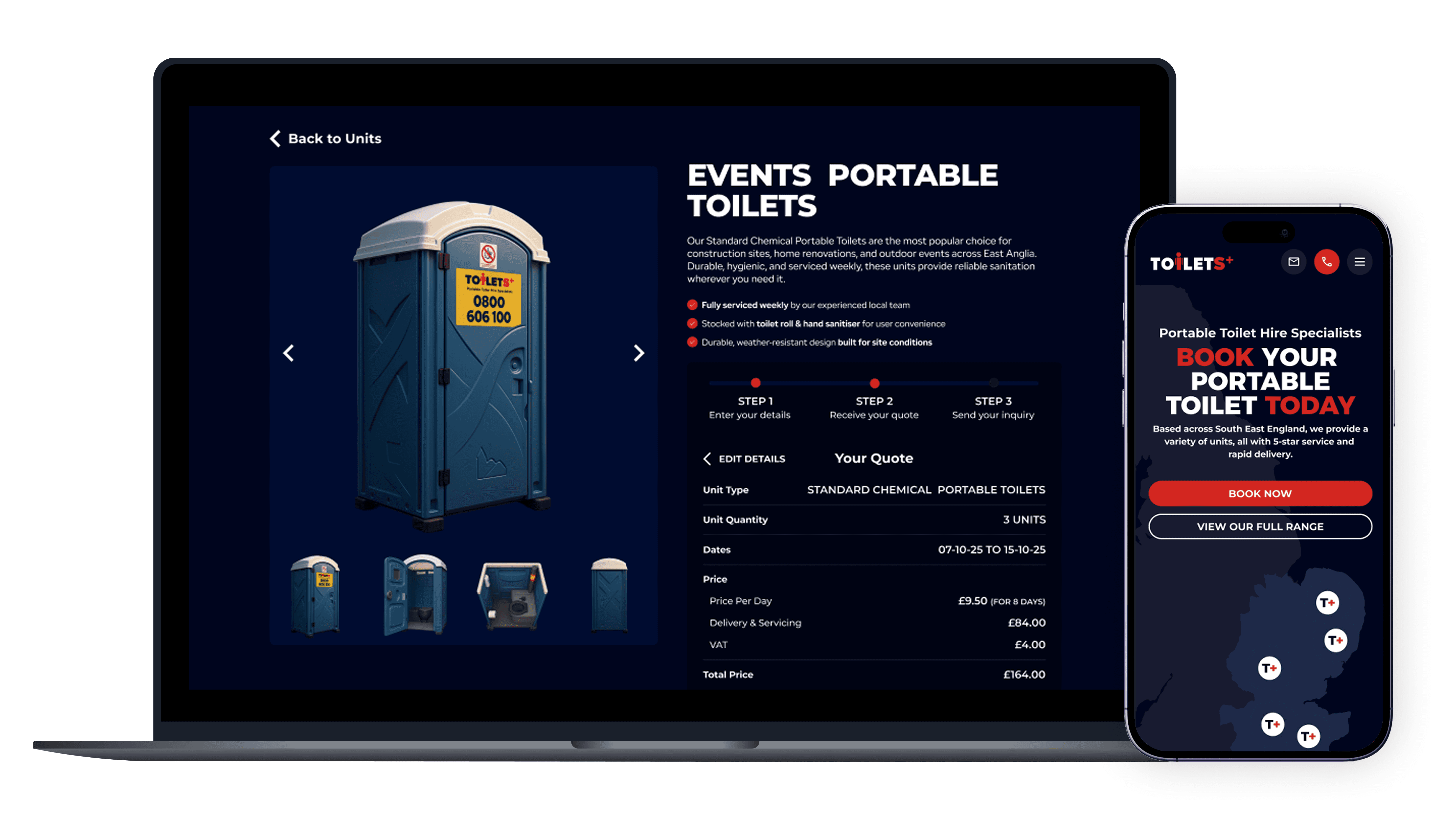
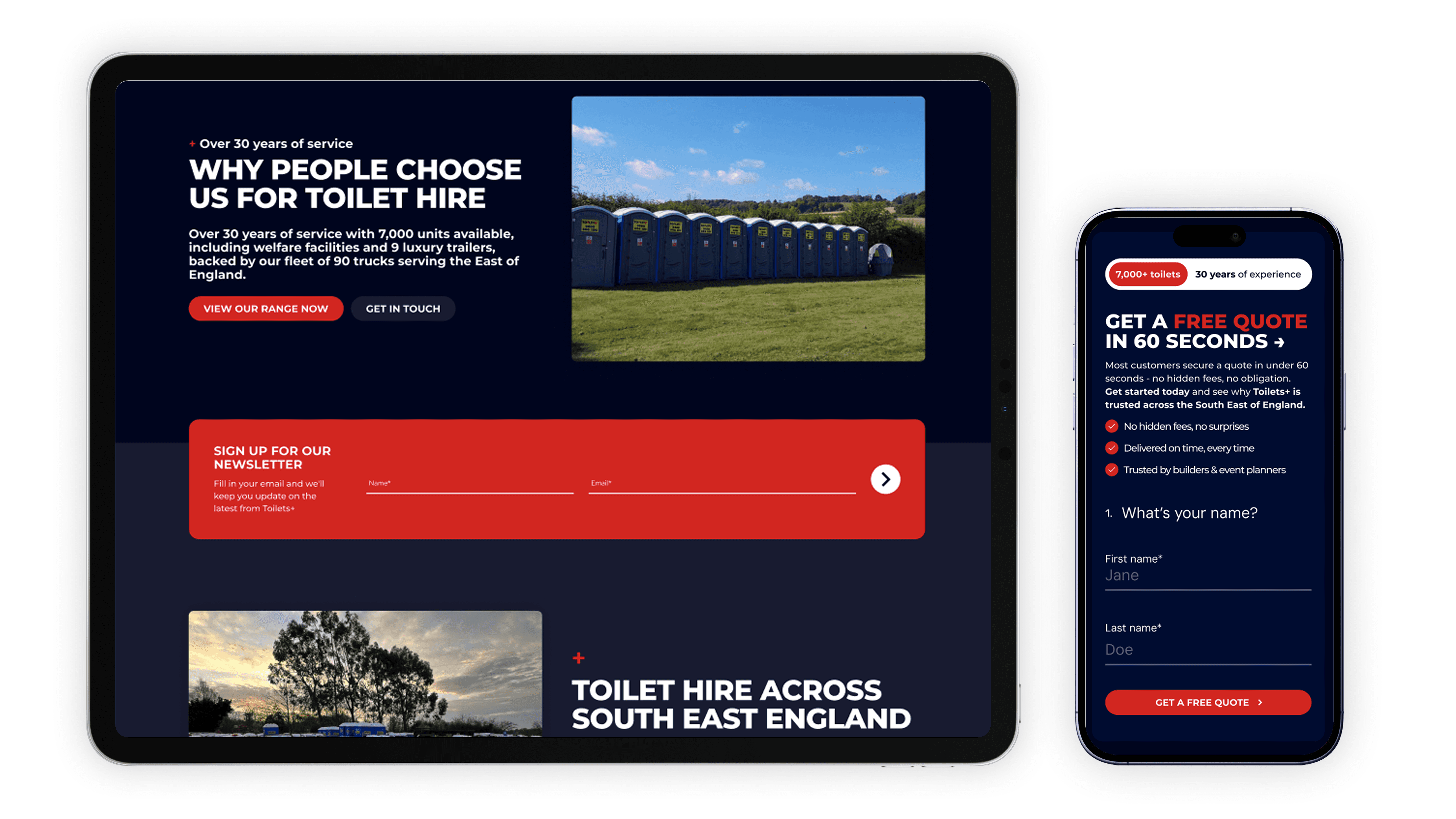
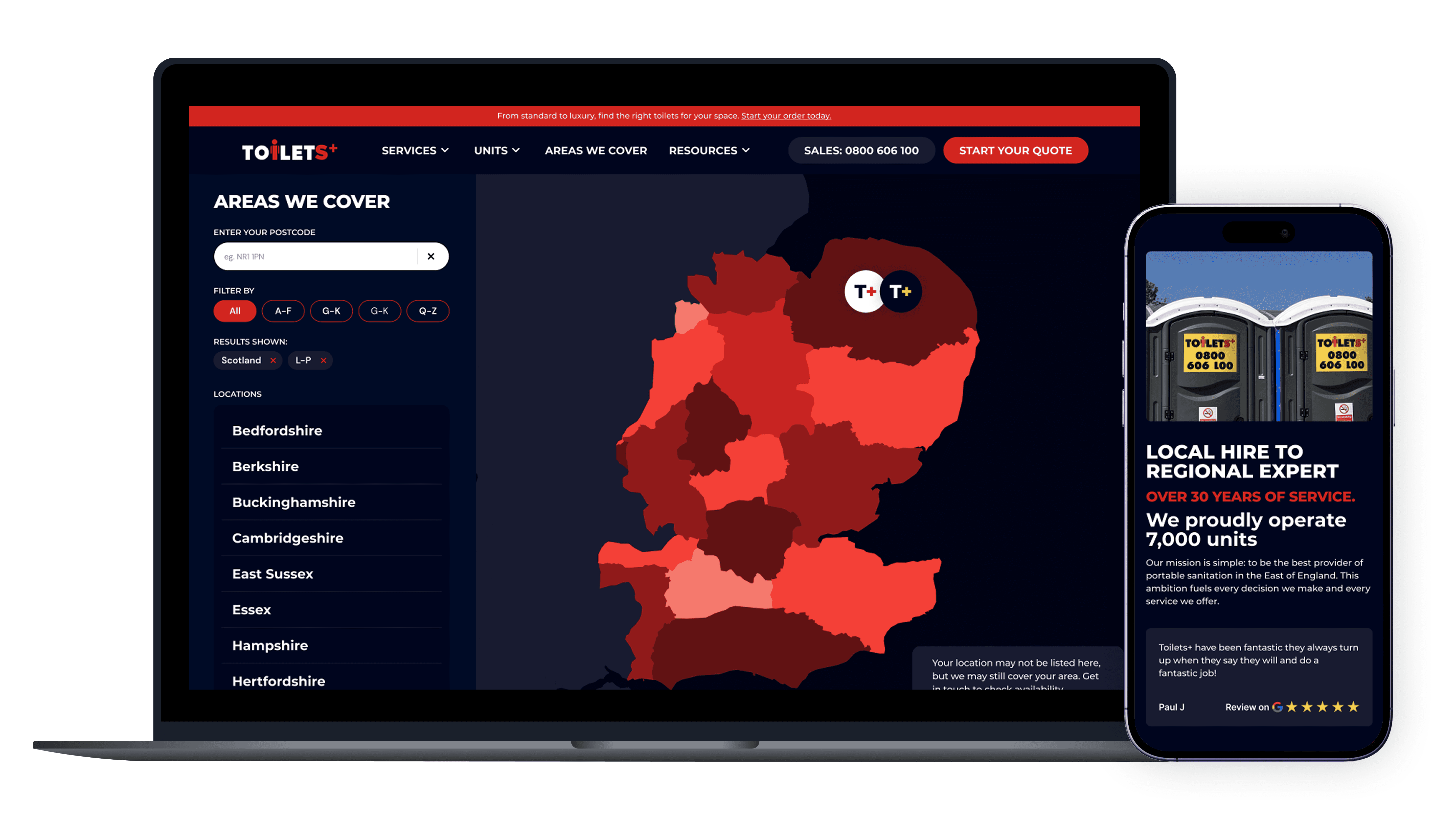
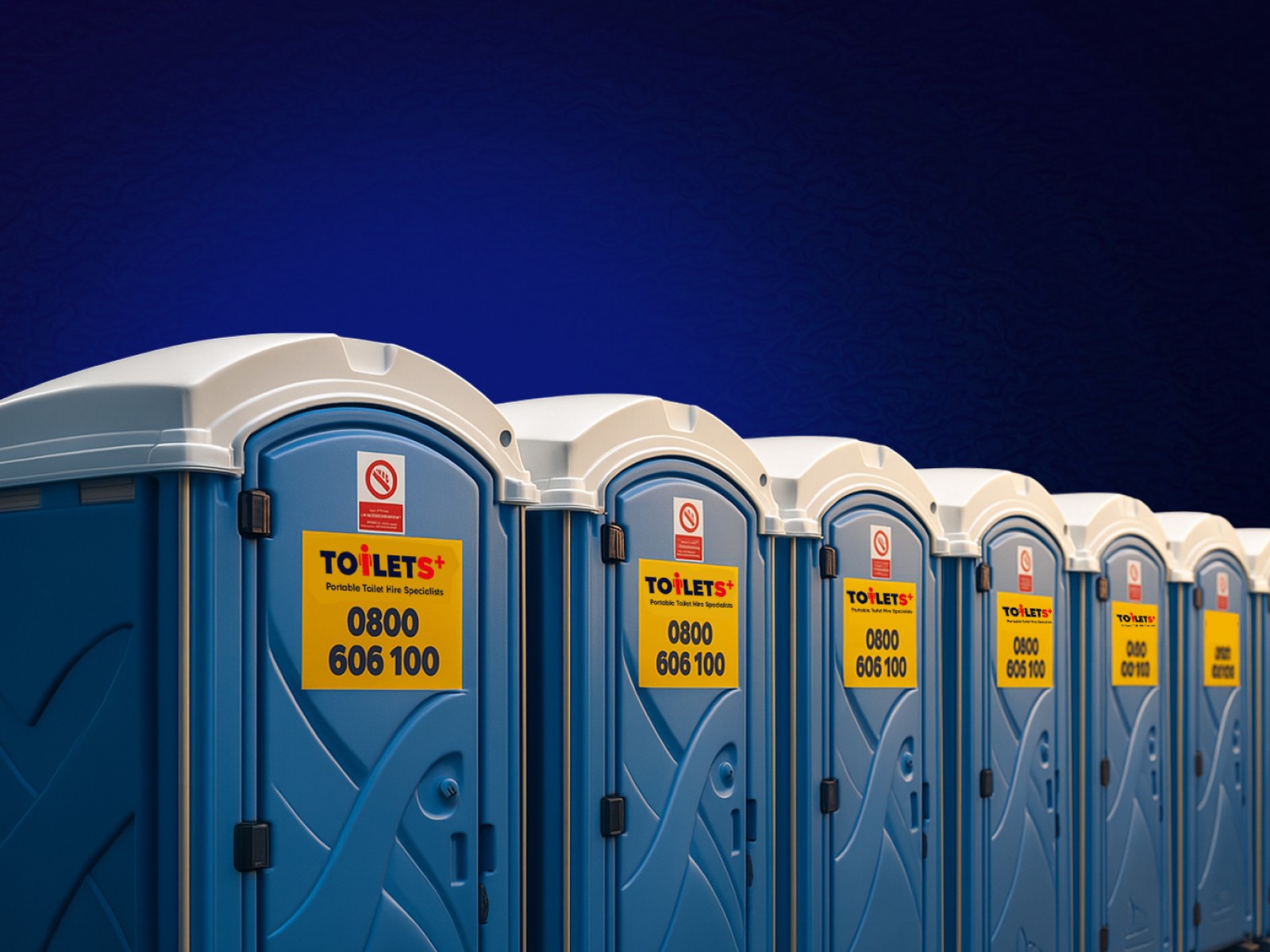
The final website unified Toilets+ under a clear, service led digital system.
The final website unified Toilets+ under a clear, service led digital system.
The final website unified Toilets+ under a clear, service led digital system.
Services were grouped into intuitive categories supported by consistent layouts and predictable navigation patterns. Content was rewritten to focus on use cases, reassurance and next steps rather than raw specification. The result was a calmer, more confident experience that helped users quickly understand their options and take action with clarity.
Services were grouped into intuitive categories supported by consistent layouts and predictable navigation patterns. Content was rewritten to focus on use cases, reassurance and next steps rather than raw specification. The result was a calmer, more confident experience that helped users quickly understand their options and take action with clarity.
Services were grouped into intuitive categories supported by consistent layouts and predictable navigation patterns. Content was rewritten to focus on use cases, reassurance and next steps rather than raw specification. The result was a calmer, more confident experience that helped users quickly understand their options and take action with clarity.